Monday, April 8, 2013

Cancer fighting Database

Posted by Brad Haymore

 
Imagine a database designed specifically to help doctors fight cancer.  CancerLinQ is that database, and its prototype has just emerged on the market. CancerLinQ will collect and analyze information from cancer care that is given to millions of patients.  The database will combine the information collected from patients, expert guidelines, and other evidence found to generate real-time guidance for doctors.  Doctors will be able to then receive quality feedback on how to help their personal patients.

CancerLinQ performs certain functions:


1)Real-time data collection,
2)Clinical decision support,
3)Data mining & visualization,
4)Quality feedback


Why is such a database needed? 

Today when a doctor encounters a problem he has never dealt with before, he goes to his literature for answers and will also asks his colleagues for advice.  With CancerLinQ, this same doctor could access the database and analyze real time findings in millions of patients.  The personal identity of patients would be removed in the database, but their life saving information would not. 

This is an innovative way that IT is helping to improve healthcare and medicine.  IT allows doctors to collaborate in ways that were unheard of before and to use their best practices to fight diseases such as cancer.  Innovations like this database could speed up the availability of real time data to doctors to use on problems they are facing today.  The timeliness of information in the fight of cancer is essential.  Good information available now is much better than great information available when it’s too late.


Sources:


Green IT. Contradicting E-waste.

Published by: Tyler Avery

Countering the E-waste post, this entry pertains to the Green initiatives of Information Technology. Similar to most other Green actions, IT is no different. So what is Green IT? The official terminology refers to environmentally sustainable computing. Call it Green IT, Green computing or ICT sustainability, in a nutshell, it has two main objectives. 1) to shrink the negative impacts of IT and 2) use IT to help save the environment. 

Green IT is all around us. In researching this post, I found out that sustainable computing has greatly increased without my knowledge or consent. For instance: wireless transactions. I recently received a notice from my utility provider that it would be in my best interest to go paperless. Not being keen to wireless transacting due to the commonality of internet fraud and theft, [thanks to this class] I decided not to do so.  However, it was noted that companies are making the move to cut down on environmental waste. Huge internet giant, Google just shelled out $200 million to invest in wind turbines in Texas. More on that here

Energy efficiency tops the action-item list for the initiative. Yes, it is important to control the E-waste landfill, but what I found to be most gripping, was another infographic here. Striking me as informative and interesting, I researched some of the most common things we college students do now, that, if altered could impact the Green IT campaign.

Some good facts to know…
By turning off your computer each night or when not in use (i.e. lunch times, weekends, when in meetings at night) for a year you save as much energy as it takes:
  • to run a clock radio for 1,392 weeks
  • to make 9,280 bags of microwave popcorn
  • to wash 464 loads of washing
  • to use your blow dryer for 5,568 hours
  • to vacuum for 464 hours
  • to produce 3,480 plastic bags
  • to run your microwave 24 hours a day for a week
  • to boil your kettle for 24 hours a day for 268 days 
I also discovered a list of 10 key facts that will 'make your head spin' here, as well as very descriptive infographics via pinterest here.

What do you, the reader, think about Green IT? Even more so, what are you willing to do about minimizing your carbon footprint? 


http://www.greenitweek.org/learn/news-a-articles/185-what-is-green-it
http://chemicallygreen.com/going-green-an-infographic-guide-to-cost-effective-living/
http://www.goinggreentoday.com/blog/10-green-facts-that-will-make-your-head-spin/
http://pinterest.com/bennuworld/green-infographics/

Tuesday, April 2, 2013

Smart Drugs: Nanotechnology in Medicine

Published by Daniel Powell

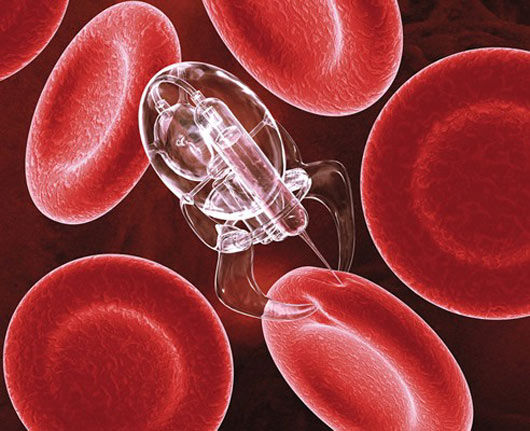
My first encounter with the concept of nanotechnology was in Michael Crichton's Prey.  While the idea of a swarm of hybrid organic-mechanical particles learning to cooperate and destroy other organisms for self-preservation is a bit far-fetched, nanotechnology is not!

Nanotechnology, simply put, is engineering on a very small scale.  To be exact, nanotechnology operates at a molecular and atomic level.  Nanotechnology is applicable across numerous scientific fields and disciplines.  The implications of nanotechnology are so big that in 2000 the U.S. government as created the National Nanotechnology Initiative.  The NNI is a collaborative effort by twenty-six federal agencies to further the research, development, and regulation of nanotechnology.

One such collaborative efforts is with the National Cancer Institute to channel nanotech research and development from the laboratory to the clinic, where it can be used to develop newer and more effective methods of diagnosis and treatment for cancer.  One application is the use of nanotechnology in defending cancer treatments against rejection by the immune system.  Another application aids in more targeted treament by joining drugs with polymer nanoparticles which are attracted to specific proteins often found in cancer cells.  More in-depth descriptions of nanotechnology treatments can be found here.

While it is still an emerging field and very much in the research and development stage, the applications of nanotechnology in medicine are very evident and will only grow and become more exciting in the next few years.


Sources:
http://www.nano.gov/initiatives/commercial/industry-collaborations

http://www.understandingnano.com/cancer-treatment-nanotechnology.html

Saturday, March 30, 2013

Problems with electronic records?


In this new century of ever advancing technology the medical realm has been making drastic changes on what seems to be a day to day basis but is everything that technology has to offer a good thing? Electronic medical records in the past decade have been sky rocketing in recent years and while what seems to be an almost only positive solution to overflowing file cabinets there may be more drawbacks then meet the eye.

Before even installing an electronic records system hospitals have to realize that start up costs can be quite high, much more expensive than traditional file cabinets. In fact, since January of 2011 there has been 7 billion dollars paid out through the Medicare and Medicaid Electronic Health Records Incentive Program (spectrum.ieee.org). There must be equipment bought and once it’s been bought and installed medical charts need to be converted to electronic form. Even then doctors don’t always know if each patient’s records have been converted (wisegeek.org). On top of that doctors have to learn how to use the electronic system. Learning how to become familiarized with the system may take some time even if they take training before hand which would cost money as well as needing to pay the trainers to train the practitioners. This unfamiliarity with technology can create shortened doctor visits with the doctor struggling to use the new equipment as well. During a visit to the doctor it can also be easy for the doctor to type incorrect information or miss out important details especially if they are unfamiliar with the system (wisegeek.org).
Technology isn’t always reliable as well and a frozen computer can take away time from patient care. Being dependent on power can also lead to serious problems during natural disasters.

It’s easy to think that with advancing technology there are an endless amount of benefits but it’s clear that there are a number of cons hidden in the shadows.   


Wednesday, March 27, 2013

The Green Way

By Jack Williams

Information Technology greatly impacts both Health and the Environment. It helps health experts keep track of records using MIS systems. It helps doctors and laboratories come up with new, and more helpful drugs to fight sickness and disease. It helps you save paper and in turn save trees that produce oxygen for us to breathe. The list of ways IT effects the environment and Health care individually is endless. I believe that one way IT effects them both in one situation is when it comes to Recycling.
"Recycling is the process of waste for reuse: the processing of used or waste material so that it can be used again, instead of being wasted". Recycling is done in many different ways depending on what is being recycled. For example, Kimberly Clark, a paper manufacturer, takes waste paper in huge bulk, places it in huge waste paper machines,and converts all the waste into pulp. Pulp is crushed paper and wood that is used to make paper products such as toilet paper, hand wipes, paper towels, and tissue paper. This process helps save our environment by making our world and air cleaner due to recycling.
"Global warming is an increase in the world's temperatures, believed to be caused in part by the greenhouse effect". Global warming is a huge part of our lives as it has the potential to effect us all. If global warming gets worse and worse to the point of it drastically effecting the human race, it could be devastating to the worlds population. Now we are hopefully a long way from this becoming a possibility but due to recycling and IT, we are able to stop global warming in its tracks. Technology helps and makes recycling possible by creating machinery to recycle waste, by creating new, tech savvy, products that our better for the environment like hybrid cars, and can be used to genetically modify plants and trees to allow them to grow faster and in turn, create oxygen from carbon dioxide more efficiently. This is how Technology helps our health and environment directly.

Monday, March 25, 2013

Knowledge and its Impacts on Your Decisions

Posted by Krzysztof Kwasniewicz

          You can never know to much about having a healthy lifestyle. Knowledge is important in all aspects of life, but especially so when it comes to being healthy. With the help of the internet, it has never been easier to learn healthy lifestyle choices and ways to prevent disease and sickness. This is one major way the internet has helped our modern society to be healthier not only in the short term, but throughout our lives. Websites live Web MD and even Wikipedia have taught people things to help make the right decisions to live long healthy lives. I challenge you to take a test online by clicking on the link posted at the bottom of this blog. It is a quick 2 minute quiz covering food, diet, and lifestyle choices that can remind you as well as teach you new things and new ways to become a healthier person.

<http://www.allthetests.com/quiz28/quiz/1286912009/Healthy-Diet-Exercise>


          Once completing this test, and hopefully having learned new things, comment on this blog evaluating how you did. What score did you receive? Did you feel like the questions were difficult or not? Did you find any answers surprising? Did you learn something new?

          Good luck and have fun!


Monday, March 18, 2013

Re-Commerce: reining in E-waste


Posted by: Tyler Avery

E-Waste. Before researching the environmental impacts of IT, I had no idea that this was such a large problem. E-waste is a loose term, since electronics come in all types, shapes and sizes. Defined as being any type of consumer or business electronic that has reached its useful lifetime expectancy, E-waste is becoming an increasing challenge in the human health environmental field. 

At first, I took this as a small problem, but consider this: every electronic item that you have previously owned times all the people who own electronics times the past 20 or so years. Each time a new phone, computer, television, microwave, stereo, copier, fax machine, typewriter, etc was rendered out of date and consumers bought new ones, where do the old ones go? All the old large screen monitors, old cathode ray televisions, all the refrigerators and home appliances, technically anything after its useful life, obviously made its way to the landfill. But landfills can only be so large, can only hold so much tonnage.   

It has been reported that every year, the world tosses 20-50 million metric tons of electronics; only recycling about 12-18%. I discovered an informative infographic depicting e-waste here. When we toss aside our old equipment, sometimes it doesn’t stay locally. It can be exported to countries like Nigeria, Pakistan, India and China. The infographic describes more, putting into pictures, that people in these countries actually dismantle the used goods and then they are either incinerated, put in a landfill there, or dumped as waste water. That’s kind of upsetting. And honestly speaking, not everyone is trying to minimize their carbon footprint.That is why companies like Gazelle are becoming popular. They are heading up the recycling of used electronics in an effort they call Re-Commerce. I take it you have seen the ads on TV. 

In order to curtail this problem, consumers are asked to follow the old 3 R's mantra Reduce, Reuse, Recycle. You can even donate your old phones or similar items to charity. A web page here advises 5 good charities to participate in, if you feel so inclined. 

What sort of E-waste have you contributed to? What are better ways to solve it? Comment below.


http://www.epa.gov/international/toxics/ewaste/index.html
http://www.calrecycle.ca.gov/electronics/whatisewaste/
http://www.treehugger.com/clean-technology/crazy-e-waste-statistics-explored-in-infographic.html
http://electronics.howstuffworks.com/donate-cell-phone-charity.htm#page=0

Thursday, March 14, 2013

Domo Arigato Dr. Roboto: Expert Systems in Medicine

Posted by Daniel Powell

Since the dawn of the computer age in the 1950s, scientists and developers have seen the potential for not only computer-aided calculations, but for aided decision making as well.  Artificial intelligence (AI), with its link between computer science and psychology, was born at Dartmouth University (then Dartmouth College) in 1956.  By the late 1970s, the notion of "expert systems," which would accumulate knowledge and use it to  make intelligent decisions, had become a common and accepted idea.

As research and development of such systems moved from university campuses to firms in the fast-growing technology industry, the applications of expert systems changed as well.  Firms focused on developing systems for internal use rather than for use in society.  The result has been expert systems assisting a wide array of industries such as oil and gas, financial management, and manufacturing.  Expert systems have not been so easily applied or accepted in the field of medicine, however.

Many logistical factors have contributed to the slower adoption of expert systems in medicine, however there are also psychological, social, and ethical factors at work as well.  Psychologically, is a patient more likely to trust the decision making of a flesh-and-blood physician or that of an expert system programmed to search its "knowledge bank" for causal and associational relationships to describe what a patient is facing?  Socially, there are dilemma's because a doctor's care for a patient goes far beyond simply diagnosing them.  The emotional effects on recovery as a result of a doctor's care throughout the diagnosis and treatment process are well documented.  If expert systems were to replace a doctor's care in the diagnosis of diseases, could it have lasting effects on the relationship and recovery process?  Ethically, as technology continues to develop, how much is too much when it comes to artificial intelligence in healthcare?  Could human doctor's eventually become completely dispensable?

These are all questions that bear answering, preferably sooner than later.

Goleman, Daniel. Emotional Intelligence. 3rd. New York, New York: Bantam Dell, 2005. 164-185. Print.

Shortliffe, Edward. "Medical Expert Systems - Knowledge Tools for Physicians." Western Journal of Medicine. 145.6 (1986): 830-839. Web. 4 Mar. 2013. <http://www.ncbi.nlm.nih.gov/pmc/articles/PMC1307157/>.

Tuesday, March 12, 2013

Healthcare from a Distance


Posted by Brad Haymore

You wake up in the morning and feel like you’ve been hit by a truck. Your body aches, your head is stuffy, and your nose is somehow clogged and runny at the same time.  What do you do?

Most would call their doctor and schedule an appointment.  A short drive and a short wait in the waiting room and “the doctor will see you now.”  After an examination, the doctor prescribes just the right medicine to get you back on your feet!

It sounds simple enough, right?  Now imagine for a moment that you wake up very ill, and realize that if you want to see a doctor, you will have to walk for 3 hours….wait for another 3 hours…and then hope that the doctor or nurse can help you. 

Although this is just a hypothetical situation for us, for some people in third world countries it is a reality. The solution to this problem may be Telemedicine. 

Telemedicine is healthcare and health education that is provided over a distance with the help of information technology (IT).  Possibilities of telemedicine include the ability to monitor a patients’ health from the comfort of their own home, speaking with your doctor face-to-face by video chat, taking a picture of a strange rash on your skin and emailing it to your doctor, or maybe your doctor forwards the picture to another specialist to get a second opinion.  All of these are examples of the applications of telemedicine. 

Telemedicine could be the answer to many healthcare deficiencies in third world countries.  The continent of Africa carries 24% of the diseases of the world and is only cared for by 3% of the world’s health care providers.  Telemedicine would help in providing care to those who live in remote areas, and would allow health care providers to continue their education.  

Although telemedicine sounds like a cure all, there are roadblocks to its success, including the lack of IT infrastructure, cost of implementation, and political policies that have yet to embrace such innovations.

Hopefully the future in healthcare will be brighter with the help of Telemedicine.


Mars, Maurice. "Telemedicine can lower health care costs in Africa." (2012): n. page. Web. 10 Mar. 2013. <http://web.up.ac.za/sitefiles/file/44/1026/2163/8121/Innovate 7/Telemedicine can lower health care costs in Africa.pdf>.


Tuesday, February 26, 2013

Technology and useful apps to make your life healthier


Due to technological advances over the past decade, it has become easier and easier to monitor and track your own life style to ensure that you are staying healthy and active. One way of doing this is by downloading applications on your personal hand held device or smart phone, that keeps track of things like calorie intake, physical activities, diet progress, weight loss, and so much more. I personally believe that this new way of keeping track of your life style allows people to make smarter every day decisions concerning their health. As obesity is becoming more common in American households, these applications can help stop and maybe one day decline the percentage of Americans who are obese. However, the available health applications are not always to help healthy eating and living; some of them in fact help people with diseases that they have such as diabetes so that they can closely monitor and analyze their body’s statistics. This allows taking control and managing your health a lot easier and convenient as you can always have access to these applications, whether you are at home or on the road. A major perk to many of these applications is that it is not just taking and analyzing the present data, it can store your past data so that you can see how you are improving over time as well as giving you recommendations for the future to help you one day reach your goal and become a healthier person.
                 A popular website that ranks all applications based on their popularity worldwide is AppAppeal. AppAppeal ranked the top 30 free health apps that help users learn more about their body, diet and overall wellbeing.
The top five ranked are as follows:
1.       WebMD
2.       LiveStrong.com
3.       SparkPeople
4.       MedHelp
5.       Avvo
If you would like to learn more about your body, diet, or overall health, these five applications may be a good place to start!
Works Citedhttps://r3.res.outlook.com/owa/14.16.264.0/themes/resources/clear1x1.gifhttps://r3.res.outlook.com/owa/14.16.264.0/themes/resources/clear1x1.gif
Kwasniewicz, Krzysztof
"Top 30 Free Health Apps." AppAppeal. Comcoaster, 2008 - 2013. Web. 25 Feb. 2013.
9:12 PM

https://r3.res.outlook.com/owa/14.16.264.0/themes/resources/clear1x1.gif
 "Top 30 Free Health Apps." AppAppeal. Comcoaster, 2008 - 2013. Web. 25 Feb. 2013.

Monday, February 25, 2013

The Main Goal of IT in Health Care

   By Jack Williams      

As previously talked about in our group presentation, technology is greatly impacting the health care system more and more every day. One way it is greatly helping is it provides information faster, conveniently, and correctly. Originally, ones doctor and health care provider was personally responsible for all of your medical records, laboratory results, tests, and records sent from other doctors or health care providers. This became complicated if you were to change doctors or health care providers due to there being a greater risk of losing your medical history and records. This could also cause doctors to have out of date medical records due to a patient seeing more than one doctor. It can also take longer for other doctors to get a hold of a patients medical history is an emergency. In contrast, 21st century hospitals and health providers, use technology as their main source to store patient information in vast data bases worldwide. This information is extremely important, not only to Doctors and medical professionals, but to every day people, due to the importance of privacy and quick access for doctors and physicians. Along with your medical history, other information is stored in these data bases like medications, allergies,current and past doctors, immunization history, past diagnoses, etc. Once this information is inputted into the databases, there is little chance of it being lost or stolen and is easily distributed among doctors and health care providers to ensure professional health services no matter what doctor you see.

          It is very important to receive the best care possible for patients which in turn means that it is very important for doctors to have all the information about there patients so that they can provide great care. This is how IT indirectly improves the quality of your care.

Group 3

Sources:
U.S. Department of Health and Human Services. "Health IT and Health Care Quality." HeathIT.gov. USA.gov, n.d. Web. 25 Feb. 2013.